Automation vs Strategy: Rethinking Dynamic Pricing in Hospitality
The Conversation
One conversation I keep having with hotel owners and property managers is about dynamic pricing. Some are fully automating ADR through pricing engines or revenue management systems. Others refuse to adjust rates at all. Both positions come from valid concerns. The real issue is not whether to use automation. It is how much control to give it.
What Automation Actually Does Well
Dynamic pricing tools are powerful. They analyze competitor rates, booking velocity, seasonal demand, and historical performance. They help operators react faster and reduce manual workload. Used correctly, they improve efficiency and visibility across channels.
Automation is not the problem. Blind reliance is.
Tools are designed to interpret structured data. They are not designed to interpret context.
What Algorithms Do Not See
Most pricing systems read demand through historical trends and real-time booking activity. But reality does not always follow structured patterns.
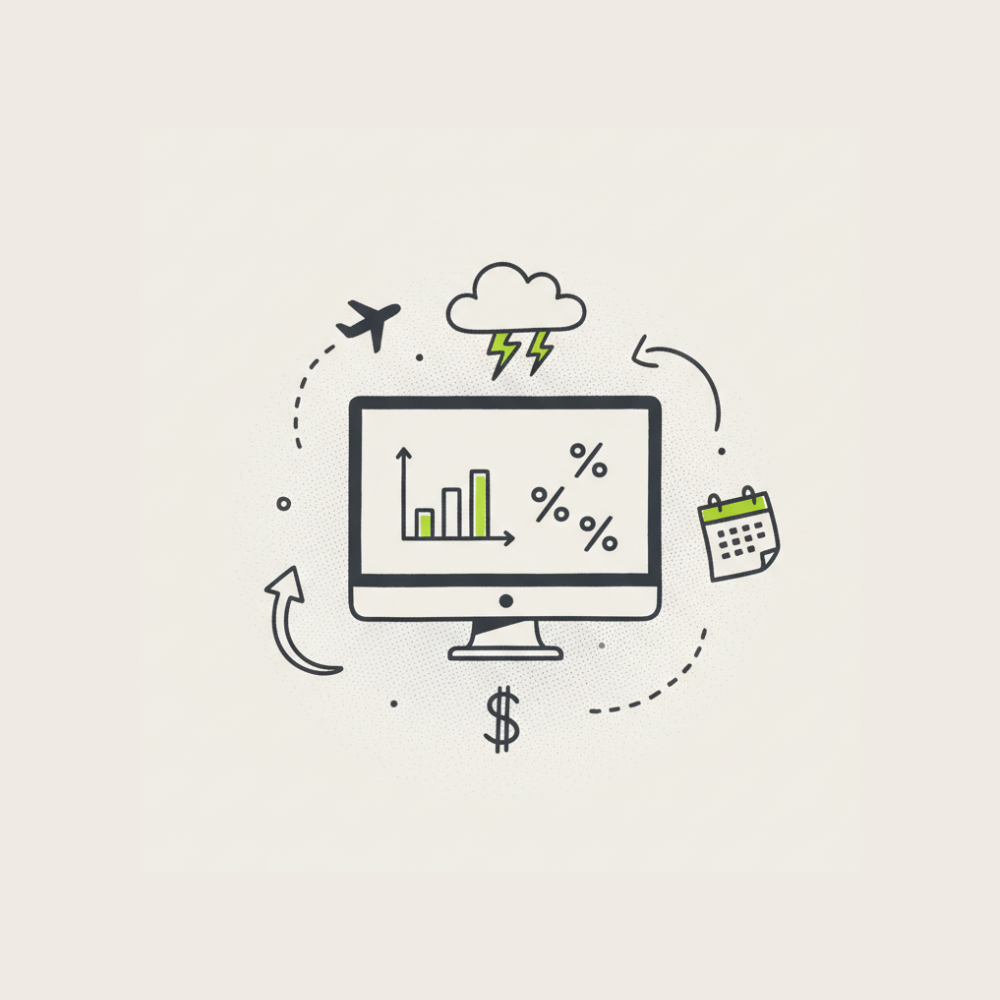
Airline route changes can reshape demand before pricing recalibrates. Political instability or travel restrictions can impact booking confidence overnight. Climate variability is increasingly shifting traditional seasonality. Infrastructure disruptions or economic uncertainty can alter perception before occupancy metrics reflect it.
Dashboards simplify reality. The market does not.
Beyond the Dashboard
Demand shifts often begin in places pricing tools do not monitor.
Search trends, destination news coverage, traveler conversations on social platforms, and review sentiment frequently signal changes before booking velocity adjusts. Operators who pay attention to these signals can anticipate demand instead of reacting to it.
Pricing should respond not only to performance data, but to traveler psychology and emerging perception.
The Strategic Layer
In practice, two extremes create inefficiencies. Full automation without oversight can compress profitability and dilute positioning. Static pricing without responsiveness can leave demand unconverted.
The leverage exists in balance.
Use automation to read the market. Use strategy to decide how you position within it.
Automation supports decisions. It should not replace them.
Brand Perception Changes Pricing Power
There is one variable automation cannot fully quantify: brand equity. Two properties in the same destination may face identical market conditions, yet one sustains higher ADR because of stronger perception and trust. When experience delivery, reputation, and word of mouth are strong, price sensitivity decreases. The brand itself becomes a demand driver.
Operators cannot price like premium brands until they have built premium brands. Until that equity exists, pricing must remain responsive to demand conditions.
Pricing is not simply about filling rooms. It is about filling them profitably and in alignment with the experience being delivered.
Dynamic pricing tools are infrastructure. They are not decision-makers.
Data should inform pricing. Strategy should define it.